
Search
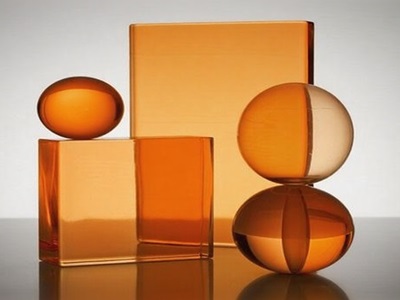
Orange Glass optical filter-GG glass
Products
- Advantages and Disadvantages of Colored Absorptive Glass
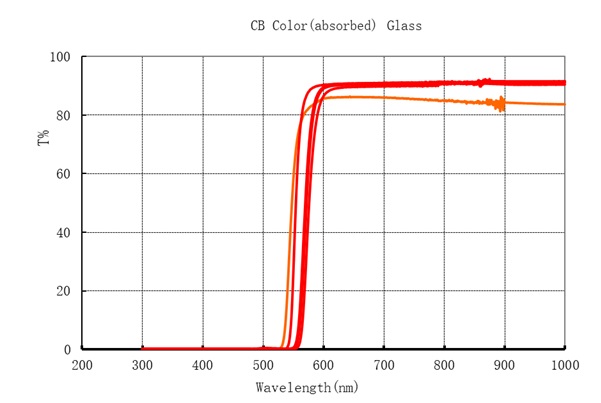
- Colored absorbing glass achieves selective absorption of the spectrum and displays specific colors by adding certain metal ions during the glass forming process. According to the type of spectrum, it can be divided into cutoff-type colored absorbing glass, bandpass-type colored absorbing glass, and neutral density absorbing glass; according to its use, it can be divided into heat-insulating glass, color temperature increasing (or decreasing) glass, wavelength calibration glass, etc. Cutoff-type colored absorbing glass is defined by the cutoff wavelength as yellow (JB series), orange (CB series), red (HB series), black (HWB series), and ultraviolet (ZWB series), etc. Bandpass-type colored absorbing glass is defined by wavelength position as cyan-blue (QB series), green (GB series), etc.
- Compared with optical thin-film filters, colored absorbing glass has the following advantages: 1. Colored absorbing glass is cheaper than optical filter. 2. Colored absorbing glass is insensitive to the angle of incidence; its spectral characteristics do not change with the angle of incidence.
- The shortcomings are: 1. The spectral changes in colored absorbing glass are slow, and its performance is not as good as that of filters. 2. Some colored absorbing glass has a spontaneous fluorescence effect, which is not suitable for detecting weak fluorescence spectra signals.
- orange glass-GG spectrum
-
- Quality-related Parameters (Bubble Extent, Striae, etc.)
- 1. Bubble Extent Definition: The number of bubbles and stones per 100 cm³ of glass relative to the total cross-sectional area, in accordance with GB/T 7962.8-2010. Classification: Graded by bubble diameter (0.03–2.0 mm) and density. Optical grade requires Class A (bubble count ≤ 0.02 per cm³, diameter ≤ 5 μm); standard optical grade ≤ 0.1 per cm³.
- 2. Striae Extent Definition: Stripe-like defects of uneven refractive index inside the glass, in accordance with GB/T 7962.7-2025. Classification: Graded by interference fringe contrast: Class 0 (Δn ≤ 2×10⁻⁶, high-energy laser systems), Class 1 (Δn ≤ 5×10⁻⁶, precision imaging), Class 2 (Δn ≤ 20×10⁻⁶, standard optics). Detection: Interferometry (Fizeau / holographic interferometer).
- 3. Other Parameters: Optical absorption coefficient (Kλ), refractive index (n_d) and Abbe number (ν_d), thermal expansion coefficient, chemical stability, etc.